[How is it used?
Used on TS125RRear.
Application:Off-road
Replaced an unidentified Pad that was probably OEM.
Was the one you received as per Image?
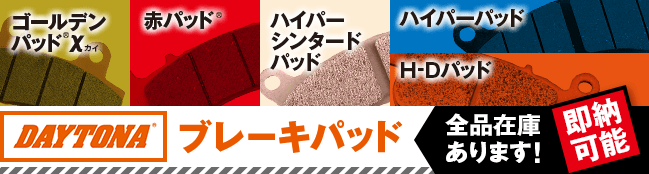
Just like the image. The Red color of the base material is also good, as it makes a strong statement.
The surface of the Brake Disc also had a semi-metallic feel to it, which seemed to work well.
Was the installation difficult?
The installation is not that difficult, and if you have enough time, it is very durable.
However, if the piston is sticking or is reluctant to move, it will take a bit of work.
When removing the pad pin or caliper mounting bolt, it is recommended that you use a good precision tool from a proper tool manufacturer if possible.
When you remove the Pad, you can push the entire Pad when you push the Piston back. (Skinning) This can be done easily by using
How was your experience with it?
for Rear is any Motorcycle in the past. (except Drum type) However, I have replaced the Red Pad and am using it. When I step on the brake pedal, the control is outstanding.
When driving off-road, the controllability of the rear brake is very important, but this product is also very useful for off-road driving.
Although the TS125R was an easy to ride motorcycle for a 2-stroke model due to its displacement, it still had a weak engine and relied mostly on the brake for deceleration. This product works as much as you step on it, and it works well until it locks up, so it was a big help when doing brake turns.
Red Pad is easy to use in many ways, no wonder it is a longtime seller.
I also felt that it was the best choice, especially if it was to be used for Rear.
Motorcycle now (Z400) I have also decided to use the Red Pad when replacing the Rear brake or when I am dissatisfied with it.
[Included Parts:were they on?
None
[Was there anything that disappointed you?
None
(Points and hangs for installation/things you should prepare together)
As the installation point or hang, the
To reduce the squeal, chamfer the short side of the pad with an ironworking file.
Apply a thin layer of brake pad grease to the surfaces of the caliper and piston. (Base material) If you apply it on the whole side, Dust will not adhere well.
If the surface of the pad pin is covered with rust or dirt, I use about #400 water-resistance paper and inexpensive lubricant such as Kure 556, etc., and clean it with oil. Then apply a thin layer of pad grease and install.
Use a mild detergent and tooth brush to clean the caliper. Use a mild detergent and toothbrush to clean calipers. ・Parts cleaners that are less aggressive to rubbers should be used only where there is a lot of dirt. (Chain cleaner) Cleaned at
Spray the entire caliper with silicon spray and wipe it with a dustcloth. (Before installing the pad)
You may want to prepare the following items together
Pad grease
Lubricant for oil sharpening
Silicon spray
RubberGrease or Silicon grease (For piston cleaning and wringing out)
Parts cleaner (Chain cleaner)
Scraper (A leather skewer or slotted screwdriver is also acceptable.)
Iron Rasp
Water-resistance Paper
PistonPliers (PistonTool) (For piston cleaning and wringing out)
Pad pin (If the rust is severe and causing bumps)
Detail anzeigen